MFN vs FTA comparison
Show the baseline tariff rate and the best preferential options for the same product and route.
Tariff & FTA Analysis
Use Federation to review MFN rates, FTA options, and landed-cost implications so teams can choose the most efficient trade route.
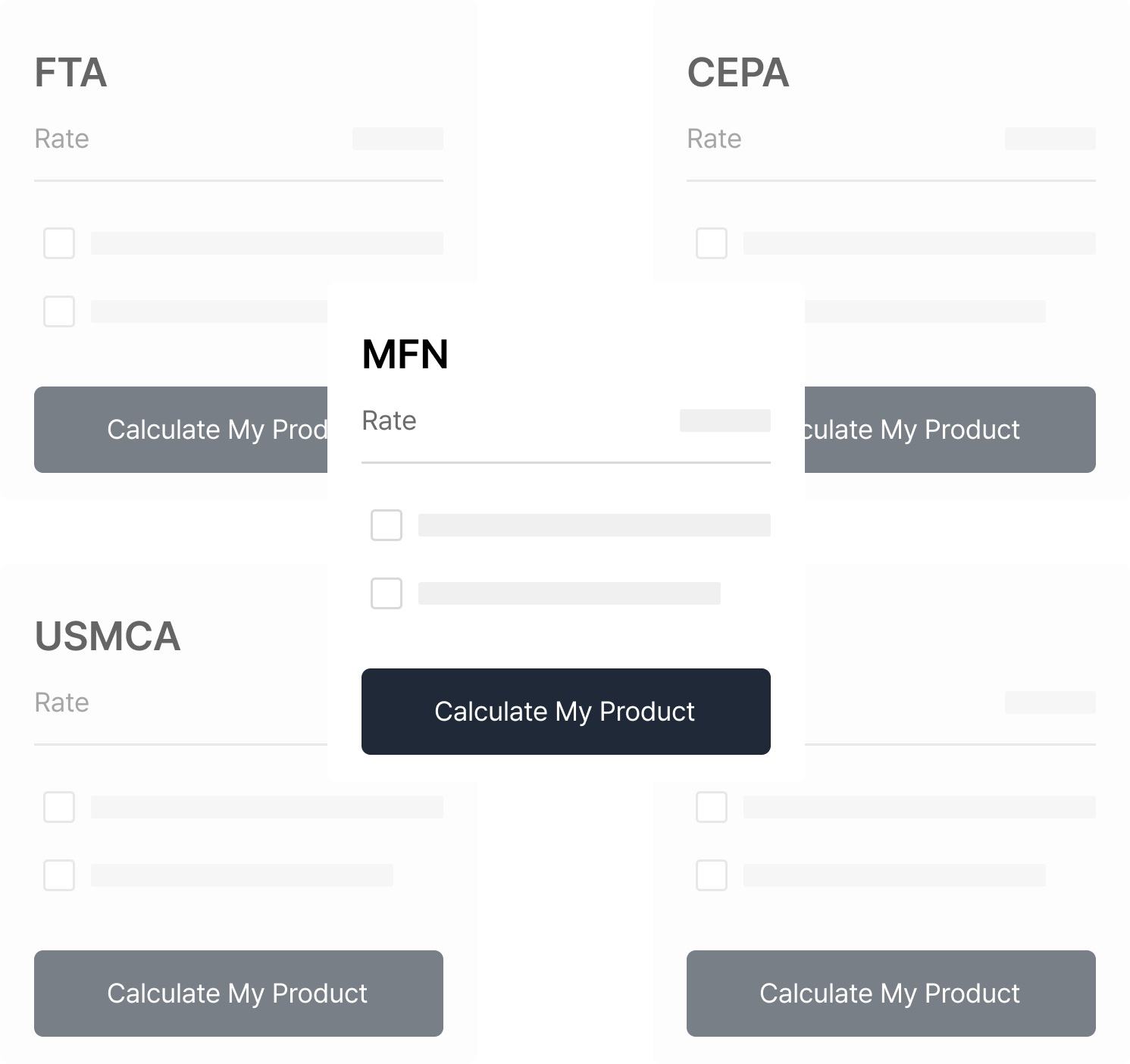
Show the baseline tariff rate and the best preferential options for the same product and route.
Explain which rules of origin, certificates, and supporting documents are needed before teams assume a lower duty rate.
Turn tariff intelligence into a landed-cost view that procurement and operations teams can actually use.
Tariff & FTA Analysis
This section is structured to read like a solution narrative, from problem framing to execution.
Define the item, origin, and destination so the analysis reflects the real shipment instead of a generic tariff lookup.
Compare MFN, FTA, and other preferential treatments, then inspect why one option is financially better than another.
Check origin rules and document requirements so estimated savings can survive customs review.
Tariff differences directly impact quoting accuracy, sourcing decisions, and profitability across every shipment.
Trade teams often know an FTA exists but struggle to confirm whether they qualify. This workflow closes that gap.
Finance, sourcing, and customs operations can align on one cost view instead of working from separate spreadsheets.
Yes. The workflow is built to compare baseline tariff exposure with preferential options so teams can see whether an agreement materially changes total cost.
Yes. Federation highlights the origin criteria and supporting documents teams need to validate before claiming FTA benefits.
Sourcing, trade compliance, customs brokers, and export planners use tariff analysis when they need to choose between suppliers, routes, or pricing scenarios.
© 2026 Federation Inc. All rights reserved.